2. Does IPS Implants® TMJ Prosthesis contain cobalt-chrome?
No. Most TMJ prosthesis suppliers work with a material combination that contains cobalt-chrome. This causes allergic reactions in many patients.
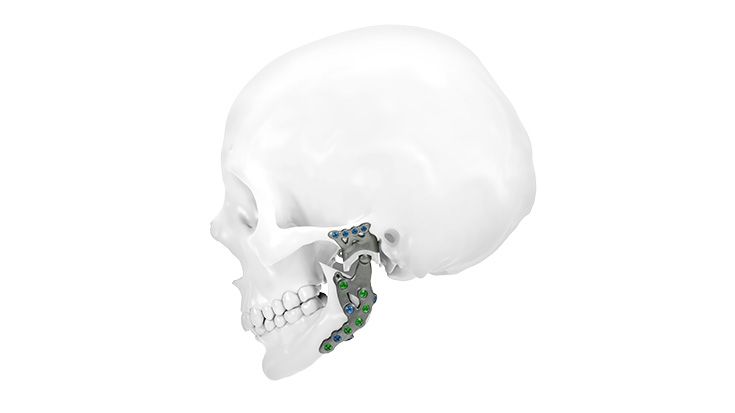
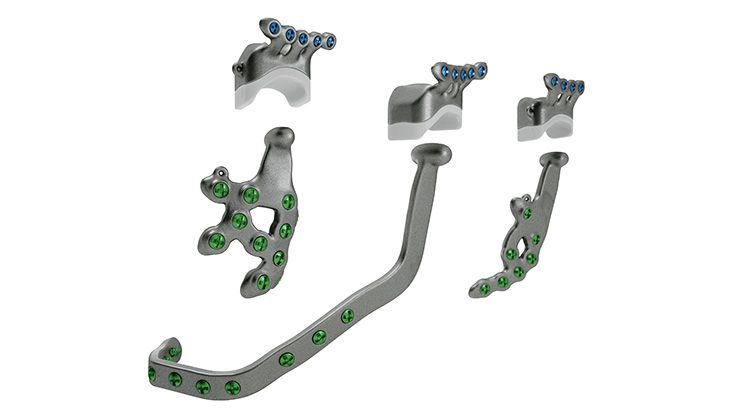
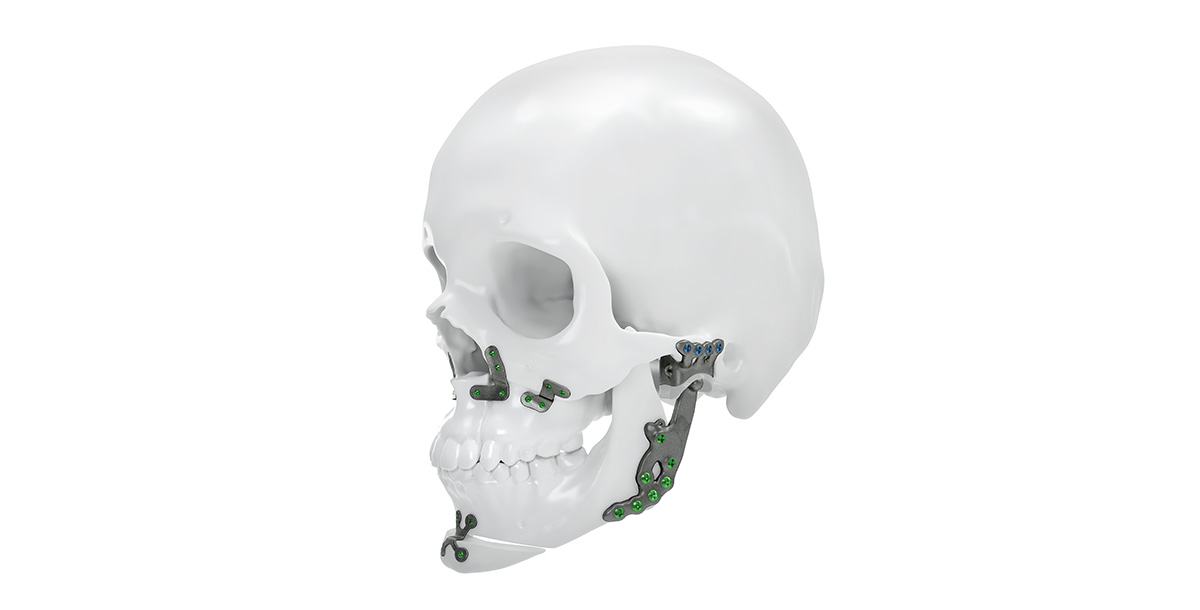
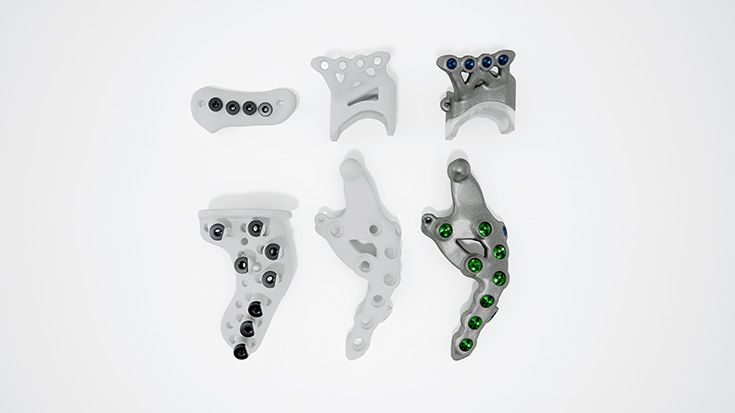
We have deliberately decided against cobalt-chrome. Our metal parts of the prosthesis components are made of additively manufactured titanium alloy Ti6AM4V.
3. Is it possible to obtain the STLs of the final planning data?
Yes, we would like to offer you an all-around service that allows you to use the STLs for preoperative visualizations, intraoperative navigation, or postoperative analyses.
4. Can an IPS Implants® TMJ prosthesis be combined with orthognathic planning?
Yes, since we design and manufacture both plates for orthognathic procedures and the prosthesis in-house, such combinations are not a problem for us.
5. Are there any special considerations for orthognathic planning in combination with a TMJ prosthesis?
For combined procedures, we recommend using the maxilla-first approach, as this allows the maxilla to be reliably referenced to the skull base. The defined maxillary position then serves as a stable foundation for mandibular positioning. This ensures that the custom-made components fit optimally and that the planned occlusion is precisely achieved.
6. Can an IPS Implants® TMJ prosthesis be connected to a mandibular reconstruction plate?
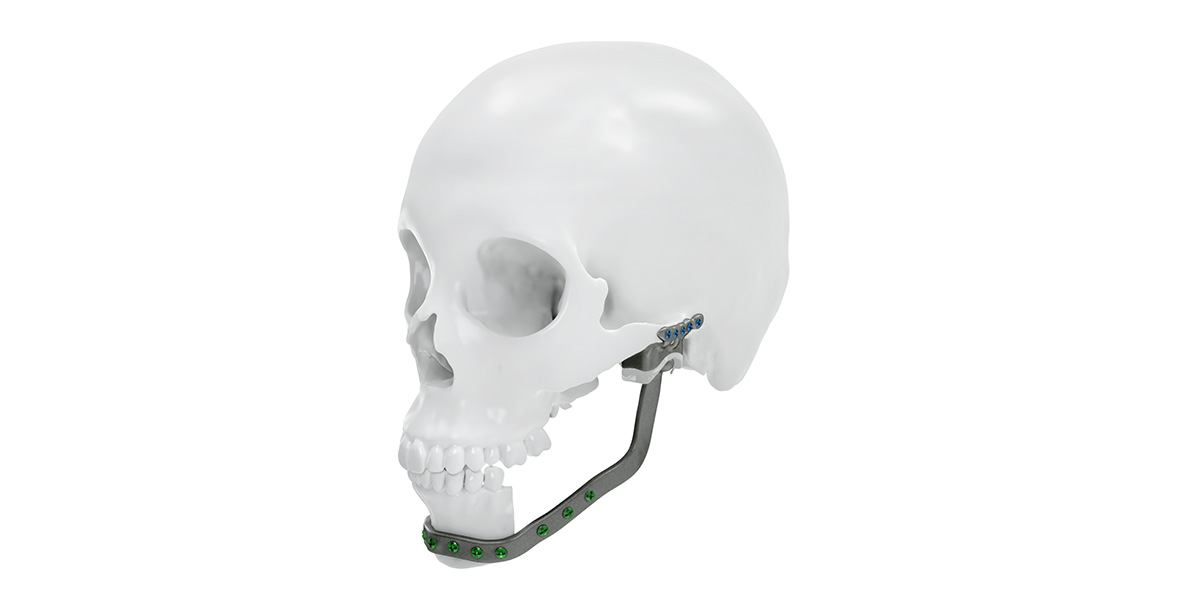
Yes, since we design and manufacture both mandibular reconstruction plates and the prosthesis in-house, such combinations are no problem for us.
7. Are there any special considerations when planning reconstruction in combination with a TMJ prosthesis?
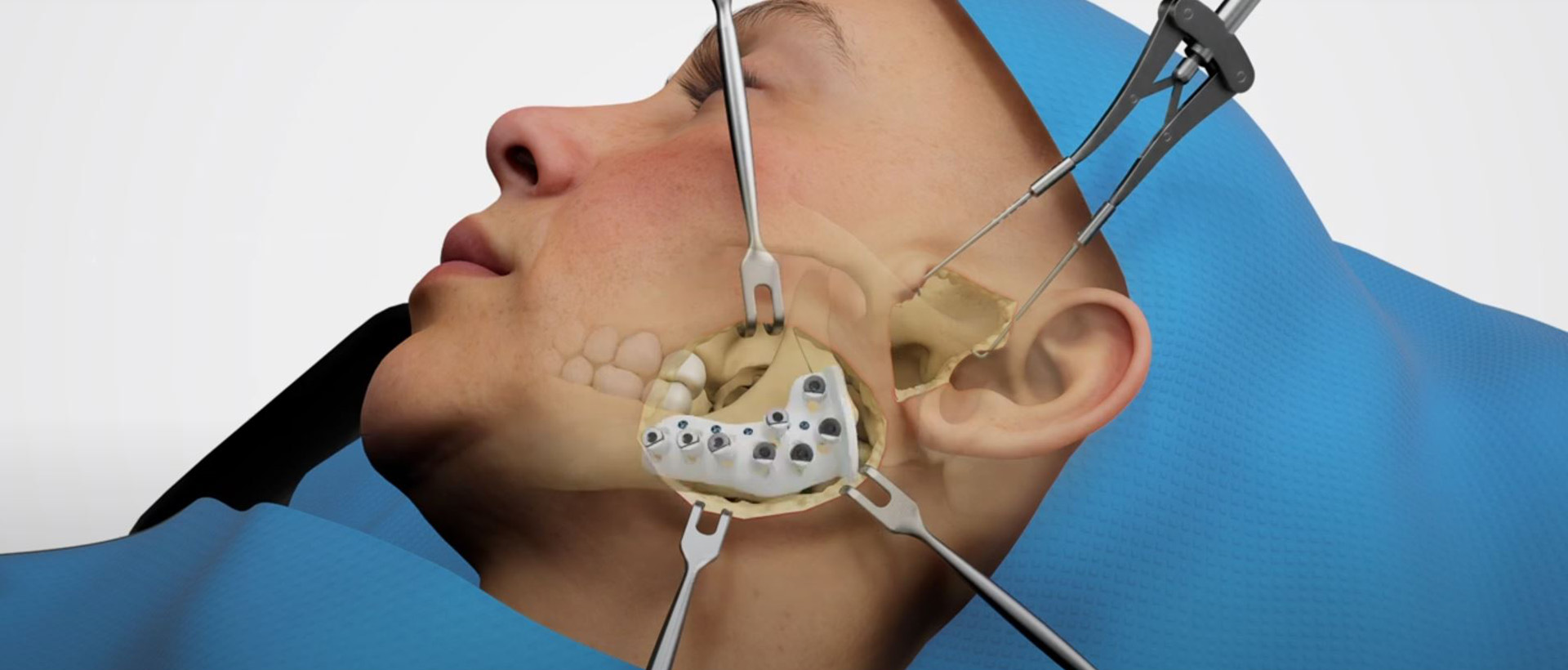
The mandibular component comes with threads for locking screws. This is particularly advantageous when a reconstruction plate with a graft is used, as the angle-stable fixation allows for micromovements that can support healing and graft integration.
8. Can only a separate custom-made fossa be ordered and combined with an off-the-shelf temporary condylar implant?
No. The IPS Implants® TMJ Prosthesis is a total prosthesis.
The temporary condylar implant from our standard/off-the-shelf portfolio is only a short-term bridging solution (max. 2 years) and cannot be combined with the IPS® variant.
9. Tips and tricks for new users: What should I consider when performing my first surgery with the IPS Implants TMJ Prosthesis?
-
Use titanium guides: They provide additional stability and precision, especially in the delicate and narrow fossa region.
-
Choose a uniform screw size: Many users prefer 2.0 screws for both mandibular and fossa components to avoid switching screwdrivers and to streamline the workflow.
-
Evaluate the soft‑tissue situation early: In patients with previous surgeries or expected scar tissue, plan potential measures in advance (e.g., distraction). Please inform our design engineers so these considerations can be incorporated into the final design.
-
Prefer standard screws: For the mandible/condyle component, standard screws are generally recommended to achieve the planned final position as reliably as possible.
-
Locking option remains available: The mandibular component is always manufactured with threaded holes, allowing the use of locking screws if needed.
-
Maintain strict aseptic technique: Before inserting the prosthesis, gloves — and if necessary, the gown — should be changed.